Kurzzusammenfassung
- Yes, you can demagnetize a neodymium magnet, and the most practical methods are thermal demagnetization (heat) and AC electromagnetic demagnetization, while physical shock is unreliable and dangerous.
- Heating to the Curie temperature (~310°C) is effective and accessible but causes a permanent loss of a few percent of magnetic strength; AC demagnetization is reversible and preferred for industrial use.
- Physical impact alone rarely works, and the grade of the magnet is a material property, meaning an N52 will still outperform an N45 after remagnetization.
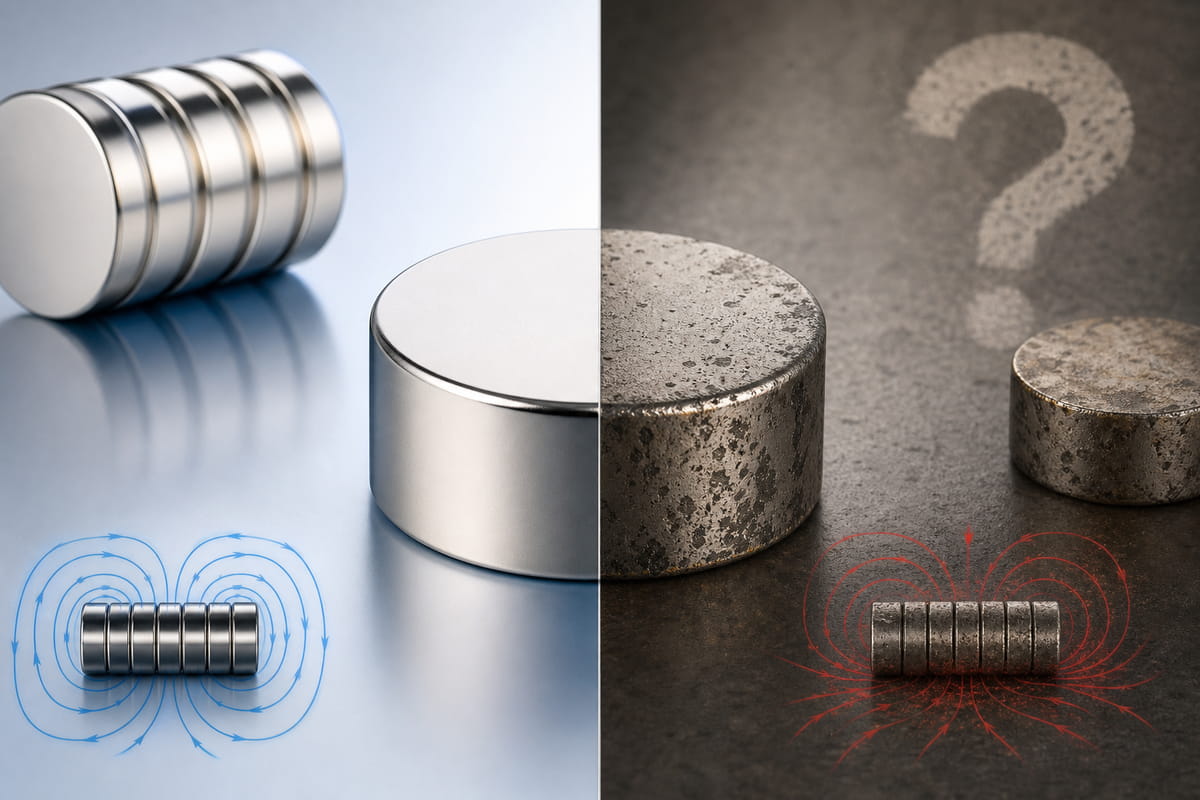
Neodymium magnets are what we call “hard” magnets. They’re designed to resist demagnetization. Whether you’re recycling scrap, fixing equipment, or working on a personal project, understanding how to demagnetize a magnet is essential knowledge.
In diesem Leitfaden, als Fachkraft Hersteller von Neodym-Magneten, I’m going to walk you through everything you need to know about demagnetizing neodymium magnets.
Dann legen wir mal los.
Why Demagnetize a Neodymium Magnet?
There are actually several legitimate reasons you might want to demagnetize one of these powerful little buggers:
Recycling and Scrap Processing
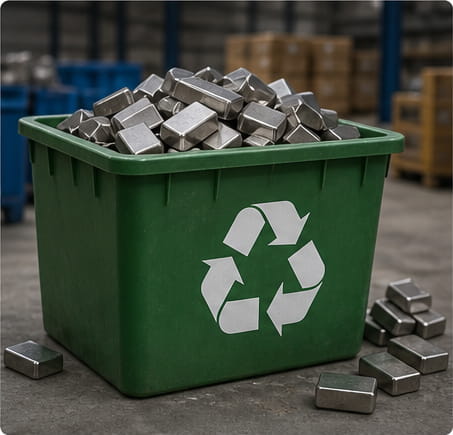
This is a big one. If you’re recycling neodymium magnets, many facilities require them to be demagnetized before they’ll accept them. Himanshu from Panipat who I mentioned earlier? He’s dealing with exactly this—thousands of magnets daily that need their magnetic force removed before shipping to Japan.
Safety During Maintenance
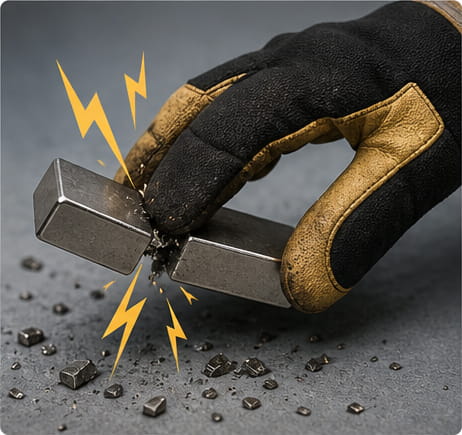
Neodymium magnets are incredibly strong. When you’re working on equipment that contains them, a sudden snap can cause serious injury. Think crushed fingers, shattered magnets, and flying metal fragments. Not fun.
Precision Work
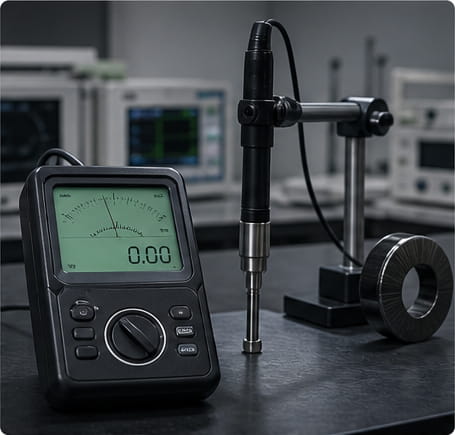
If you’re doing sensitive measurements or working with equipment that can be affected by magnetic fields, you need your workspace neutral.
Re-Magnetization Projects
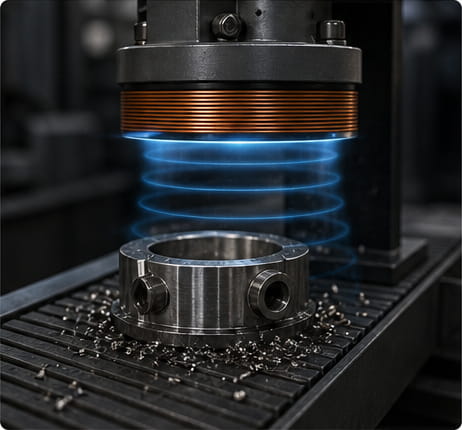
Sometimes, you want to completely reset a magnet’s magnetic domains before remagnetizing it. Think of it like erasing a whiteboard before writing something new.
Industrial Demagnetization
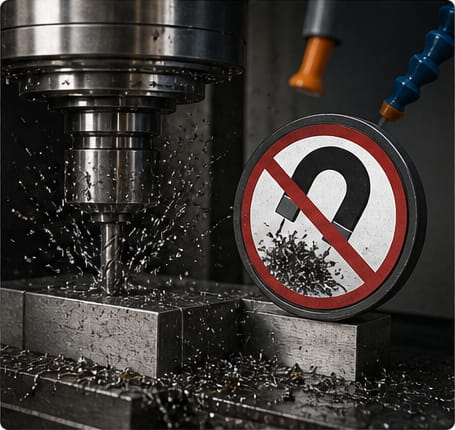
Manufacturing environments often need to demagnetize components to prevent metal shavings from sticking to them. This is especially common in metalworking and machining.
The bottom line? There are plenty of practical reasons why someone would ask, “can you demagnetize a neodymium magnet?”
And the answer is a resounding yes—but it comes with some important caveats.
Why Demagnetizing Neodymium Magnets is Different
Neodymium magnets are stubborn. They have something called “high coercivity.” That means they resist losing their magnetic field. This is actually by design—it’s what makes them so useful in the first place.
Unlike your refrigerator magnet (which you could probably demagnetize by dropping it a few times), neodymium magnets need serious intervention to lose their strength.
Three Methods to Demagnetize Neodymium Magnets
Here are the three primary ways to demagnetize neodymium magnets:
Method #1: Thermal Demagnetization (Heat)
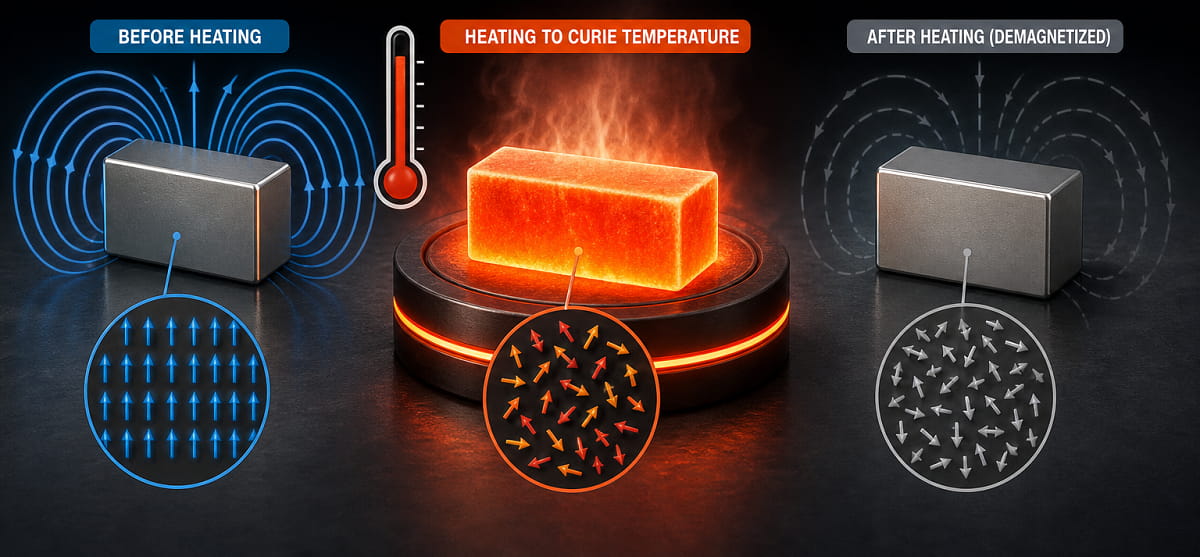
This is the most reliable method for demagnetizing neodymium magnets. And it’s surprisingly accessible—you probably already have the equipment in your kitchen.
So funktioniert es:
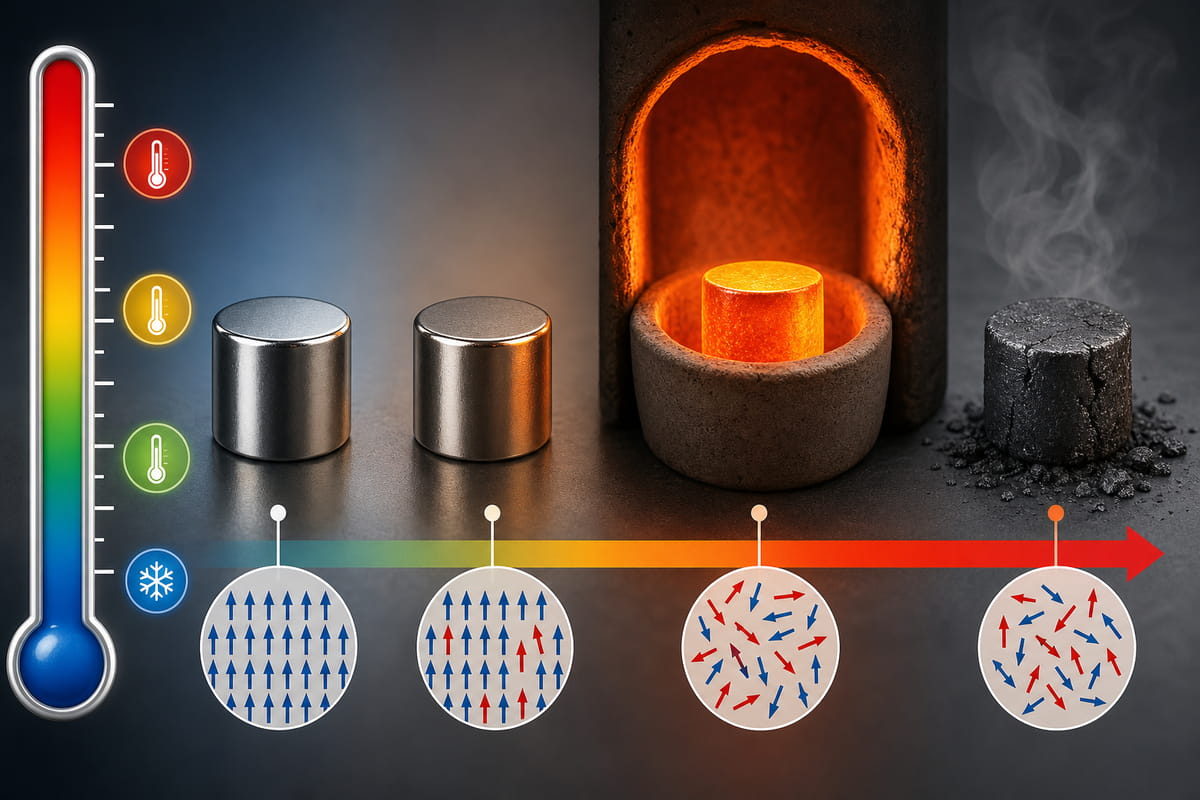
When you heat a neodymium magnet to its Curie temperature, the atomic vibrations become so intense that they break the alignment of the magnetic domains. In simple terms, the magnet loses its ability to maintain a unified magnetic field.
The magic number:
For standard neodymium magnets, the Curie-Temperatur is around 310°C (590°F). But here’s the catch:
- The working temperature is much lower (around 80°C or 176°F)
- Exceeding the working temperature causes permanent loss
- Reaching the Curie temperature completely demagnetizes the magnet
> Pro Tip: Different grades of neodymium magnets have different temperature tolerances. An N35 M-grade can handle up to 100°C, while N35 SH can go up to 150°C. Check your magnet’s specifications before applying heat.
Anwendung in der Praxis:
I’ve personally demagnetized neodymium magnets by putting them in a conventional oven. Here’s what I did:
- 1. Place the magnet on a cookie sheet (use a ceramic or non-metal tray)
- 2. Heat the oven to around 350°C
- 3. Let the magnet heat for 15-20 minutes
- 4. Turn off the oven and let it cool slowly
- 5. Test the magnet—it should have little to no magnetic field left
Safety warning:
This is where I need to be super clear with you.
Neodymium magnets are brittle. When heated, they can shatter or even catch fire. And when they burn, they release toxic fumes. So:
- Never heat neodymium magnets without proper ventilation
- Wear protective eyewear (they can shatter)
- Don’t exceed the Curie temperature by too much
- Allow slow, gradual cooling
Is it reversible?
This is a common question I get from my readers. The answer is: partially.
When you heat a neodymium magnet to the Curie temperature, you permanently alter its structure. Even if you remagnetize it later, it won’t regain 100% of its original strength. You’ll typically see a few percent loss in magnetic performance.
Method #2: AC Electromagnetic Demagnetization
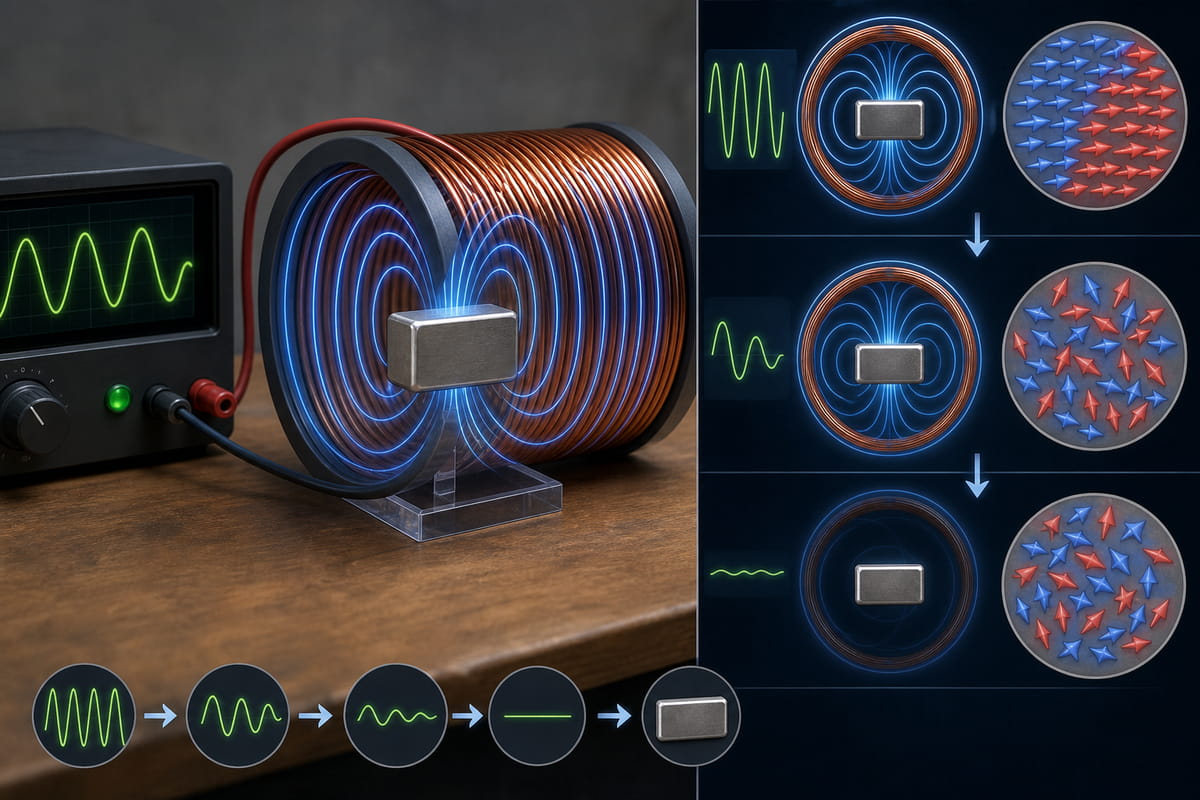
If you’re dealing with large quantities of magnets (like Himanshu’s 4,000-5,000 daily pieces), heat isn’t practical. You need something faster and more scalable.
Enter AC electromagnetic demagnetization.
So funktioniert es:
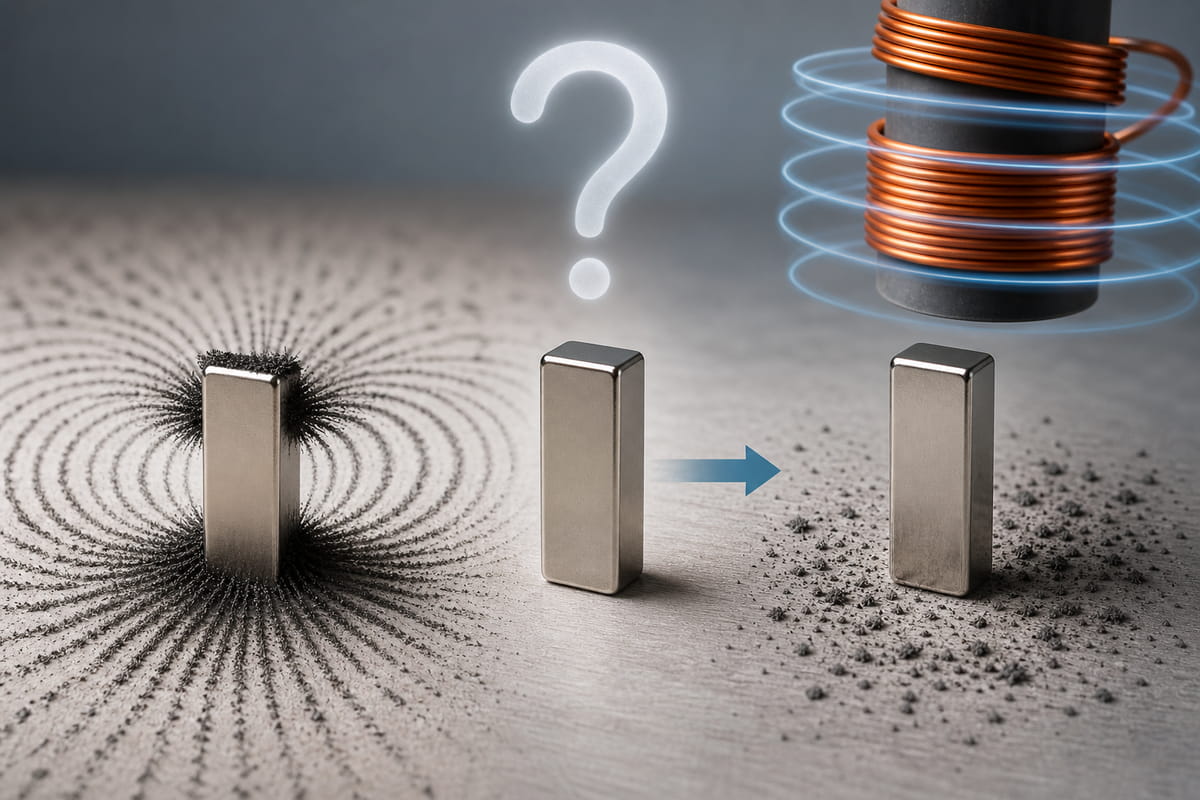
You expose the magnet to a strong alternating current (AC) magnetic field. This field rapidly randomizes the alignment of the magnetic dipoles inside the magnet. The key is to start with a strong field and gradually reduce it to zero.
The equipment:
You’ll need a dedicated industrial magnetizer/demagnetizer. These aren’t cheap, but if you’re processing thousands of magnets daily, they’re essential.
The basic setup involves:
- A copper coil (or multiple coils)
- A power supply that can generate a strong AC field
- A control system to gradually reduce the field
What Himanshu from Panipat needed:
Remember my earlier example of Himanshu? He asked specifically about inductors for demagnetizing hard drive magnets.
Here’s what I’d tell him:
You want a system that can generate high-intensity sine pulses. The frequency should be around 50-100 kA/m for maximum field strength, with a frequency between 5-20 Hz. This gives you the penetration depth you need for even demagnetization.
Der Ablauf:
- 1. Place your magnets in the demagnetizing coil
- 2. Apply the maximum AC field (enough to overcome the coercivity)
- 3. Gradually reduce the field amplitude to zero
- 4. The magnets should be demagnetized
Warum es funktioniert:
This method creates a fine domain structure inside the magnet. The alternating field causes the domains to oscillate, and as the field reduces, they settle into random orientations. No unified magnetic field remains.
Method #3: The Knockdown Method
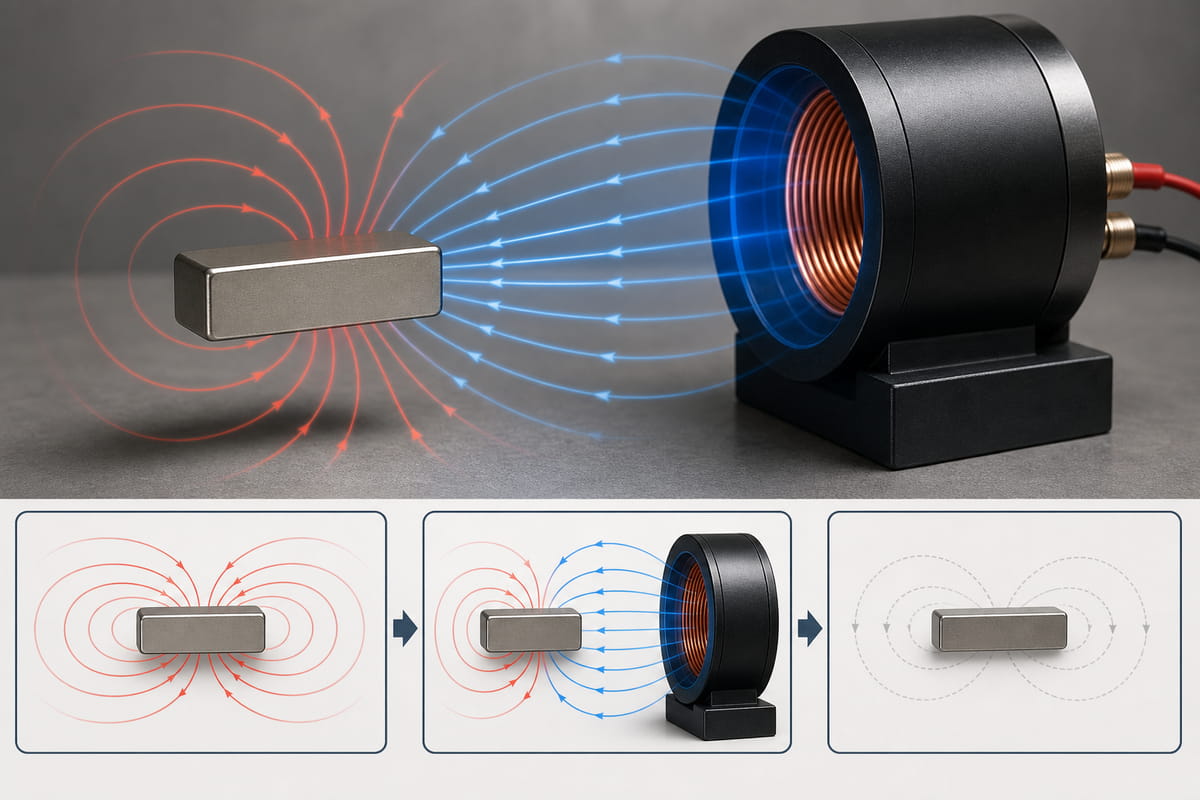
This one’s less common, but it’s still worth knowing about.
So funktioniert es:
You apply a magnetic field with opposite polarity to the magnet’s own field. If you meter it precisely, the magnetism jumps to near-zero.
Is it practical?
Honestly? Not really for neodymium magnets. The field strength required is enormous, and getting it exactly right is incredibly difficult. This method is more useful for softer magnetic materials like AlNiCo.
Why it’s not recommended:
Neodymium magnets have such high coercivity that the knockdown method rarely achieves complete demagnetization. You’re better off with heat or AC fields.
Can You Demagnetize a Neodymium Magnet with Physical Shock?
The short answer: no. Not reliably.
Und zwar aus folgendem Grund:
While physical shock can cause partial demagnetization, it’s rarely complete. The crystalline structure of neodymium magnets is tough. You might knock a few domains out of alignment, but the majority will retain their orientation.
The exception:
Physical shock can work if you combine it with elevated temperatures. Heat the magnet and hit it—this can cause significant demagnetization. But on its own? Don’t bother.
One more thing:
Hitting neodymium magnets is dangerous. They’re brittle and can shatter, sending sharp fragments flying. If you value your eyesight, keep the hammer away from the magnet.
Can You Demagnetize a Neodymium Magnet at Home?
The short answer: Yes, but with limited options.
The practical answer:
If you have an oven, you can use thermal demagnetization. It’s safe, straightforward, and doesn’t require specialized equipment.
The method:
- 1. Place the magnet on a ceramic plate or cookie sheet
- 2. Heat to 350°C for 15-20 minutes
- 3. Let it cool slowly
- 4. Test the result
The limitations:
- You’ll permanently reduce the magnet’s strength by a few percent
- Large magnets might not heat evenly
- There’s a risk of fire (though it’s low if you’re careful)
What about AC demagnetization at home?
Honestly? Not practical. The equipment is expensive and specialized. Unless you’re processing thousands of magnets daily, it’s not worth the investment.
Answering Your Burning Questions
Can you demagnetize a neodymium magnet with electricity?
Yes, using AC electromagnetic demagnetization. But you need the right equipment.
Can you demagnetize a neodymium magnet with cold?
No. Cold actually makes neodymium magnets temporarily stronger. At liquid nitrogen temperatures (-196°C), they lose about 10-15% of their strength, but it comes back when they warm up.
Can you demagnetize a neodymium magnet with a hammer?
Not effectively. Physical shock causes only partial demagnetization and can shatter the magnet. Not recommended.
Can you demagnetize a neodymium magnet by boiling it?
No. Boiling water is only 100°C, well below the Curie temperature. You’d need to reach at least 310°C.
Can you demagnetize a neodymium magnet with another magnet?
Strong opposing fields can cause demagnetization. But you’d need an incredibly powerful magnet to overcome the neodymium’s coercivity. Not practical.
Can you demagnetize a neodymium magnet with a microwave?
No. In fact, putting metal in a microwave is dangerous. Don’t do this.
Can you demagnetize a neodymium magnet with a degausser?
Yes. Industrial degaussers are essentially AC demagnetizers. They’re effective on neodymium magnets.
The Bottom Line on Demagnetization
So after all this, can you demagnetize a neodymium magnet?
Yes. Yes you can.
But which method you choose depends on your situation:
- For the DIY enthusiast: Thermal demagnetization is your best bet. It’s simple, accessible, and effective.
- For industrial recycling: AC electromagnetic demagnetization is the way to go. It’s fast, scalable, and reversible.
- For one-off projects: A combination approach might work—heat the magnet and apply an opposing field.
The most important takeaway:
Don’t expect to get 100% of your original magnet back if you use heat. You’ll get 95-98% at best. If you need full strength, avoid heat and use AC demagnetization instead.
The next step:
Now that you know how to demagnetize a neodymium magnet, the ball’s in your court. Whether you’re processing 5,000 magnets daily or just trying to safely handle one, you have the knowledge you need.