Kurzzusammenfassung
Die intrinsische Magnetkraft eines Neodym-Magneten lässt sich zu Hause nicht dauerhaft erhöhen – diese Magnete sind werkseitig gesättigt. Sie können jedoch die effektive Anziehkraft erheblich steigern, indem Sie Magnete stapeln, eine Stahlrückplatte anbringen oder eine Halbach-Anordnung verwenden. Kühlung sorgt für eine vorübergehende Steigerung um 5–8%, doch Hitze oder physische Stöße können zu einer dauerhaften Entmagnetisierung führen. Für die meisten Anwender ist der Umstieg auf eine höhere Güteklasse (wie N52) oder die Verwendung einer Stahlhülse der einfachste und zuverlässigste Weg.
Hattest du schon einmal einen Neodym-Magneten, der einfach nicht mehr so stark anzog wie früher?
Vielleicht arbeitest du gerade an einem Projekt und brauchst etwas mehr Haftkraft. Oder vielleicht hast du einen Stapel “ausgedienter” Magnete in einer Schublade liegen, die du eigentlich schon wegwerfen wolltest.
Werfen Sie sie noch nicht weg. In diesem Beitrag werde ich als Experte Hersteller von maßgefertigten Neodym-Magneten, werde ich Ihnen einige bewährte Techniken vorstellen, mit denen Sie die Leistung Ihres Magneten sofort steigern können.
Manche Methoden dauern 5 Minuten. Andere erfordern etwas mehr Aufwand.
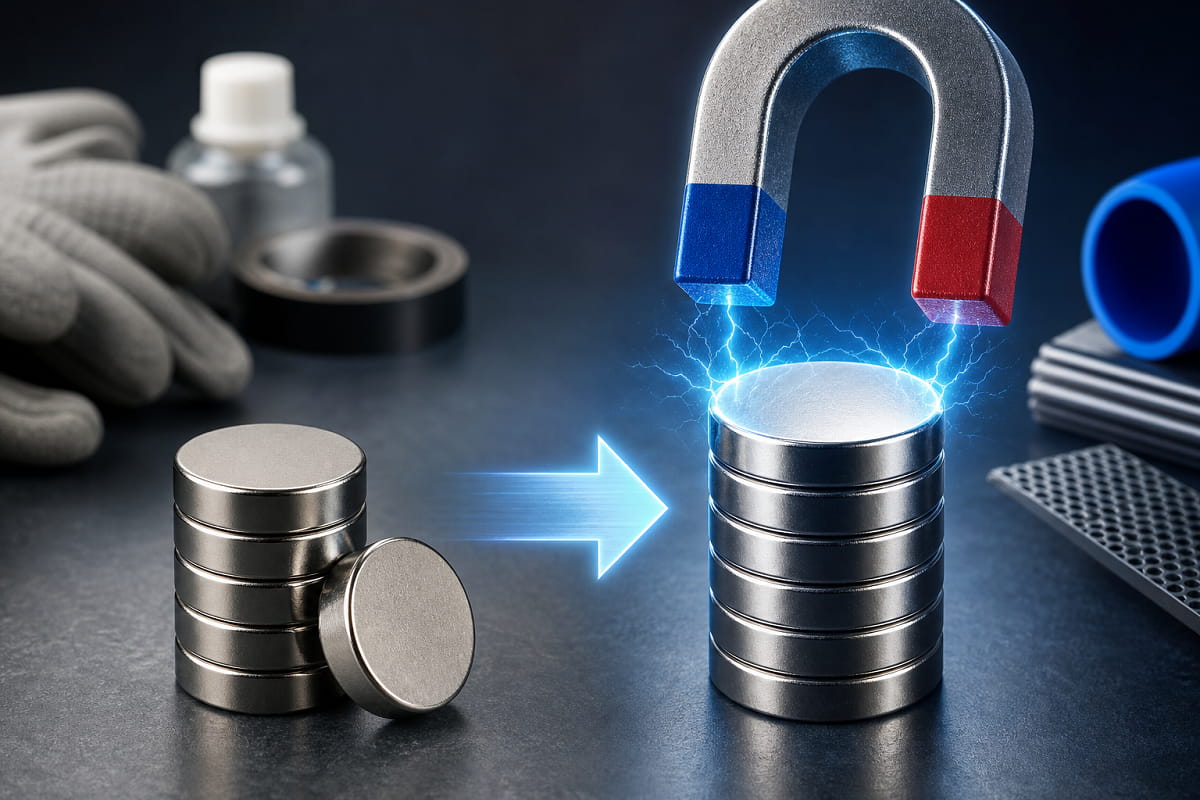
Kann man einen Neodym-Magneten WIRKLICH stärker machen?
Ganz offen gesagt: Nein. Neodym-Magnete werden werkseitig dauerhaft gesättigt. Das bedeutet, dass man ihre inhärente Magnetkraft nicht auf magische Weise durch Strom oder einen stärkeren externen Magneten erhöhen kann.
Aber man KANN dessen Leistung drastisch steigern wirksame Zugkraft. Man kann seine Energie bündeln. Man kann mehrere Magnete miteinander kombinieren. Und man kann die Wechselwirkung mit Metalloberflächen optimieren.
Stell dir das mal so vor:
Man kann den Motor eines Autos nicht leistungsstärker machen, ohne Teile auszutauschen. Aber man KANN seine Leistung verbessern, indem man das Gewicht reduziert, die Aerodynamik verbessert und die Kraftübertragung auf die Räder optimiert.
Das gleiche Prinzip gilt auch hier.
Also, ich zeige es dir ganz genau Wie man Neodym-Magnete stärker macht in der Praxis.
Wie man Neodym-Magnete stärker macht
Methode #1: Mehrere Magnete übereinander stapeln
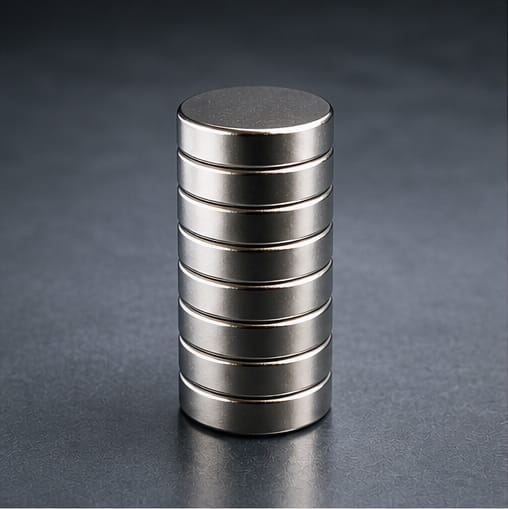
Das ist die am leichtesten zu erreichende Möglichkeit.
Wenn man zwei identische Neodym-Magnete mit den Magnetpolen zueinander gerichtet aufeinanderlegt (wobei sich die Pole anziehen), bilden sie praktisch einen einzigen größeren Magneten.
Wie viel stärker?
Ich habe einige Tests mit Neodym-Scheibenmagneten der Güteklasse N42 (20 mm Durchmesser, 5 mm Dicke) durchgeführt. Hier sind meine Ergebnisse:
| Stapelgröße | Zugkraft | Erhöhung |
|---|---|---|
| 1 Magnet | 5,8 Pfund | – |
| 2 übereinander | 9,1 Pfund | 57% |
| 3 übereinander | 11,5 lbs | 98% |
Profi-Tipp: Das Magnetfeld wird an den Enden des Stapels stärker, solange die Dicke des Stapels seine Breite oder seinen Durchmesser nicht übersteigt. Sobald dieser Punkt überschritten wird, nimmt der Nutzen ab.
So geht’s:
Nehmen Sie zwei identische Neodym-Magnete. Achten Sie darauf, dass ihre Pole in dieselbe Richtung zeigen (sie ziehen sich dann an und stoßen sich nicht ab). Schieben Sie sie anschließend vorsichtig mit Hilfe eines nichtmetallischen Keils aneinander.
Warnung: Lassen Sie sie nicht gegeneinander schlagen. Neodym-Magnete sind spröde. Sie können beim Aufprall zerbrechen. Und herumfliegende Magnetsplitter? Das macht keinen Spaß.
Methode #2: Eine Stahlrückplatte anbringen
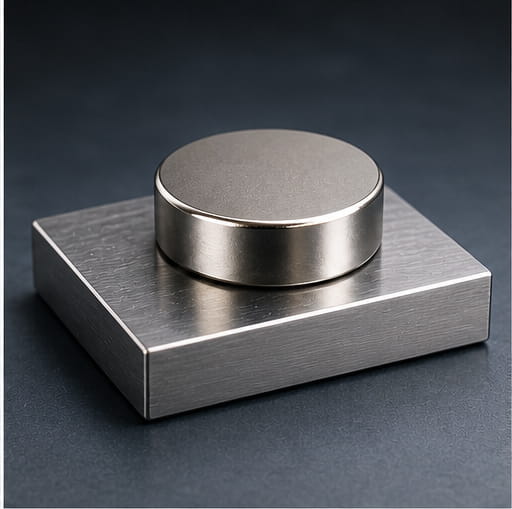
Möchtest du ein Geheimnis erfahren, das die meisten Hobbyisten völlig übersehen?
Ein einfaches Stück Stahl kann die effektive Haltekraft Ihres Magneten verdoppeln oder sogar verdreifachen.
Warum das funktioniert:
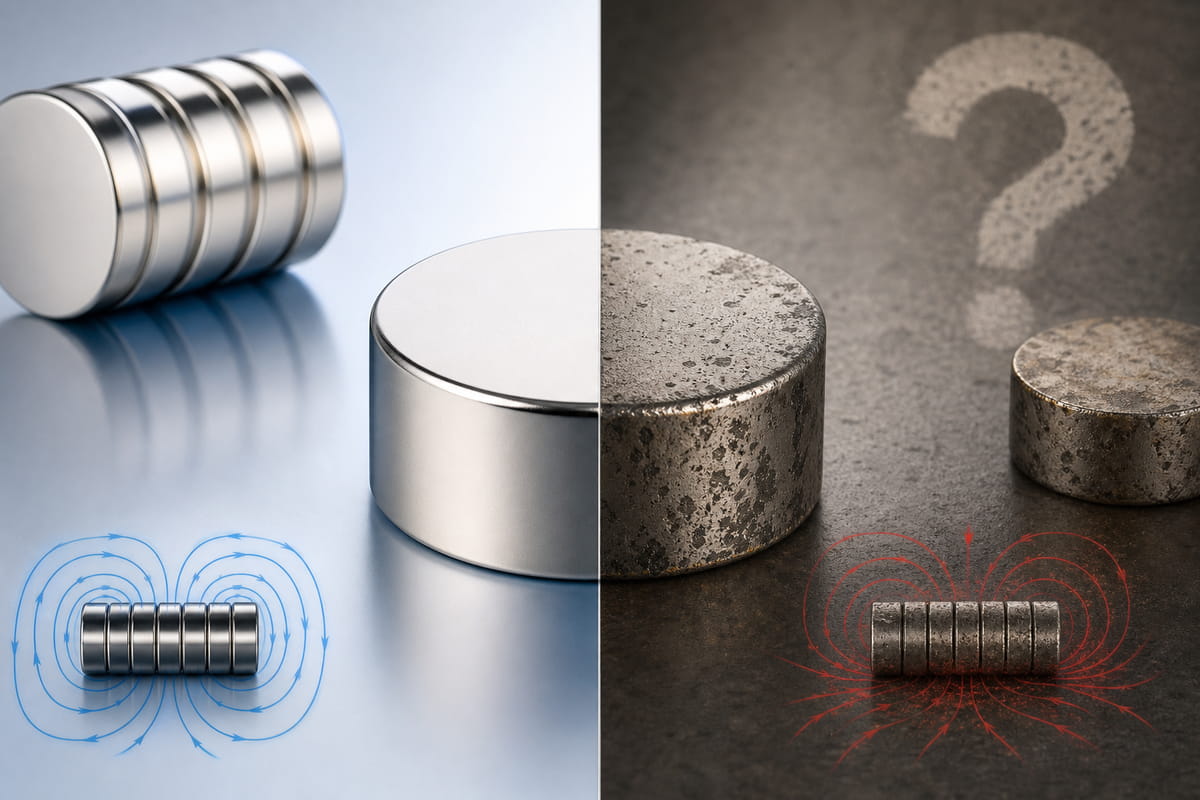
Wenn man einen Neodym-Magneten auf eine Stahlträgerplatte legt, wirkt der Stahl als magnetischer Leiter. Anstatt dass sich die Magnetfeldlinien nach allen Seiten in die Luft ausbreiten, lenkt der Stahl die gesamte Energie um und bündelt sie auf die Vorderseite.
Das ist das Prinzip, das hinter “Topfmagneten” (auch als Bechermagnete bezeichnet) steckt. Eine kleine Neodym-Scheibe in einem Stahlbecher kann mit unglaublicher Kraft halten.
Das Ergebnis?
Je nach Geometrie kann eine Stahlrückplatte die effektive Zugkraft um 30-200%.
Das ist kein Tippfehler.
So geht’s:
Suchen Sie sich ein Stück Weichstahl (eine Dicke von 3–5 mm eignet sich hervorragend). Legen Sie Ihren Neodym-Magneten direkt darauf. Das war’s schon. Der Stahl muss nichts Besonderes sein. Achten Sie nur darauf, dass er ferromagnetisch ist.
Profi-Tipp: Um eine maximale Wirkung zu erzielen, verwenden Sie eine Stahlschale, die die Seiten UND die Rückseite Ihres Magneten umschließt. Dadurch werden fast 100% des Magnetflusses auf die Vorderseite gebündelt.
Methode #3: Aufbau einer Halbach-Anordnung
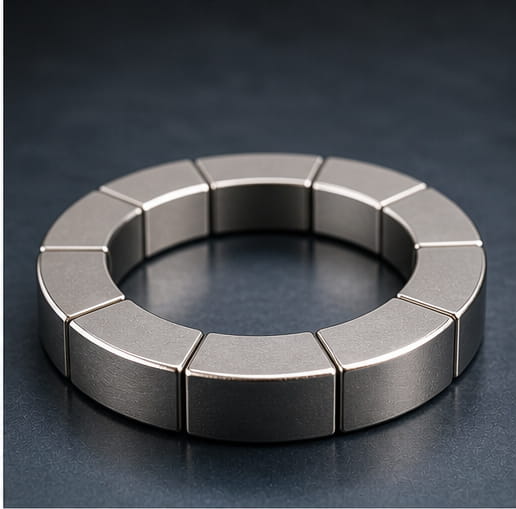
Das hier ist etwas für fortgeschrittene Nutzer.
Ein Halbach-Array ist eine spezielle Anordnung mehrerer Magnete, die das Magnetfeld auf EINER Seite bündelt und es auf der anderen Seite aufhebt.
So funktioniert es:
Man ordnet die Magnete so an, dass sich ihre Pole in bestimmten Reihenfolgen abwechseln. Zum Beispiel: oben, rechts, unten, links.
Dadurch entsteht ein “einseitiger” Magnet, der auf der Arbeitsfläche unglaublich stark ist, auf der Rückseite jedoch fast keine Anziehungskraft mehr ausübt.
Anwendung in der Praxis:
Nehmen wir einmal an, Sie entwickeln ein Magnetschwebesystem oder einen hocheffizienten Elektromotor. Eine Halbach-Anordnung kann die Leistung erheblich steigern, ohne das Gewicht zu erhöhen.
Der Haken daran? Das funktioniert nur mit mehreren Magneten. Und die Geometrie muss präzise sein.
Fazit? Wenn Sie lediglich versuchen, einen einzelnen Magneten besser an Ihrem Kühlschrank haften zu lassen, sollten Sie diese Methode überspringen. Wenn Sie jedoch an einem technischen Projekt arbeiten, könnte eine Halbach-Anordnung genau das sein, was Sie brauchen.
Methode #4: Kalt halten
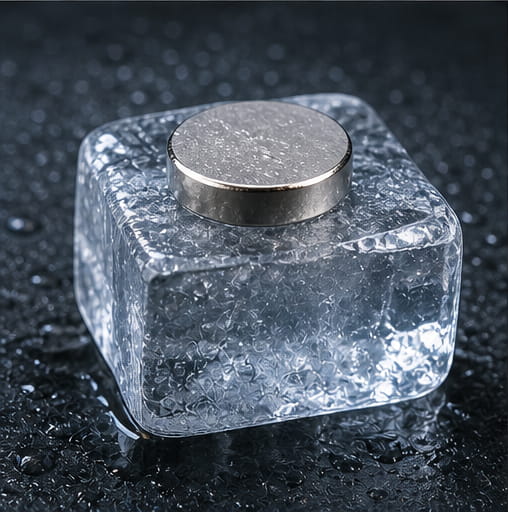
Das ist ja interessant.
Wenn man einen Neodym-Magneten abkühlt, wird sein Magnetfeld tatsächlich stärker.
Warum?
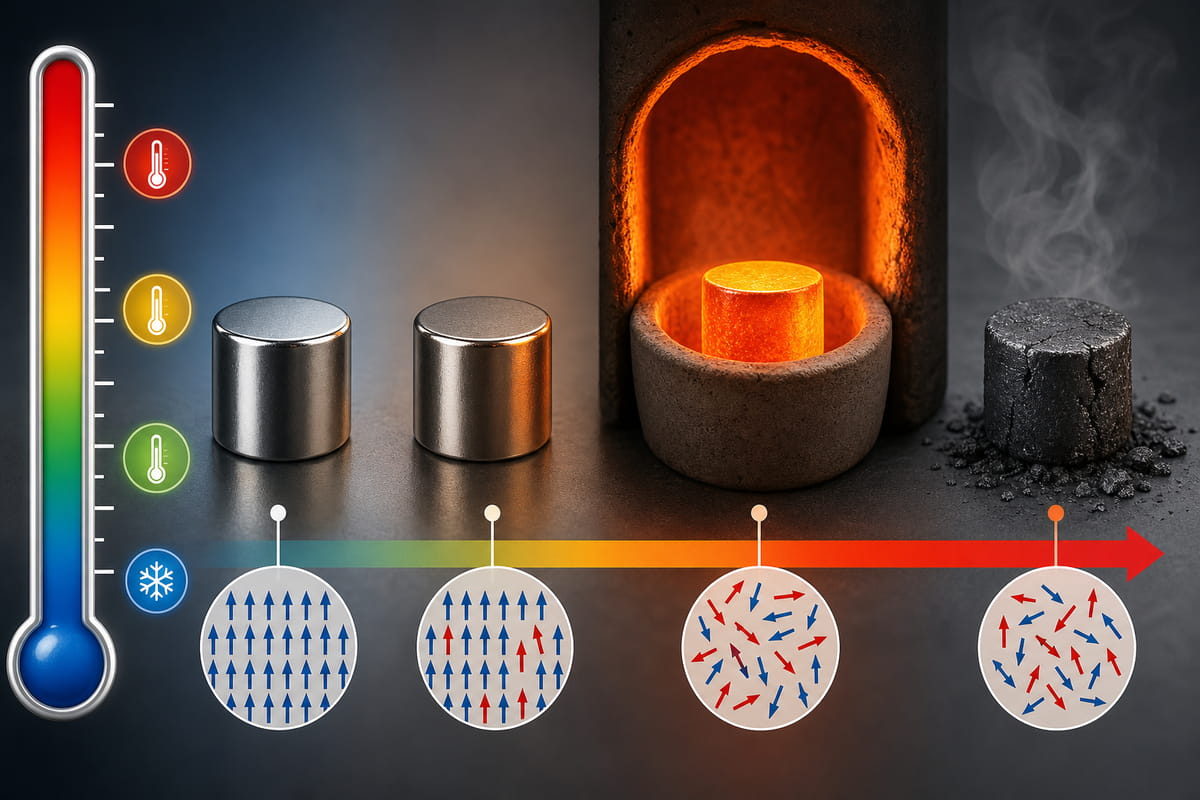
Durch Wärme schwingen die Atome stärker. Stärkere Schwingungen bedeuten eine geringere Ausrichtung. Eine geringere Ausrichtung bedeutet ein schwächeres Magnetfeld.
Kalte Temperaturen bewirken das Gegenteil. Die Atome beruhigen sich. Sie ordnen sich besser an. Und dein Magnetfeld wird stärker konzentriert.
Um welche Art von Leistungssteigerung geht es hier?
Studien zeigen, dass das Abkühlen eines Neodym-Magneten auf -40 °C (was interessanterweise auch -40 °F entspricht) dessen Restflussdichte um etwa 5-8%.
Nicht besonders stark. Aber doch spürbar.
So lässt sich das überprüfen:
Legen Sie Ihren Magneten für 24 Stunden in den Gefrierschrank. Testen Sie anschließend seine Anziehungskraft im Vergleich zu einem Magneten desselben Typs bei Raumtemperatur.
Aber hier ist die Warnung:
Extreme Kälte kann Neodym-Magnete in Standardqualität tatsächlich spröde machen. Und wenn man sie zu schnell wieder erwärmt, besteht die Gefahr einer Entmagnetisierung.
Außerdem ist dieser Effekt vorübergehend. Sobald der Magnet wieder Raumtemperatur erreicht hat, kehrt auch seine Magnetkraft zurück.
Ist das also eine praktische Methode? Wie man Neodym-Magnete stärker macht Für den täglichen Gebrauch? Nicht wirklich. Aber für den Einsatz in kalten Umgebungen ist es gut zu wissen.
Methode #5: Richtige Lagerung (Ja, wirklich)
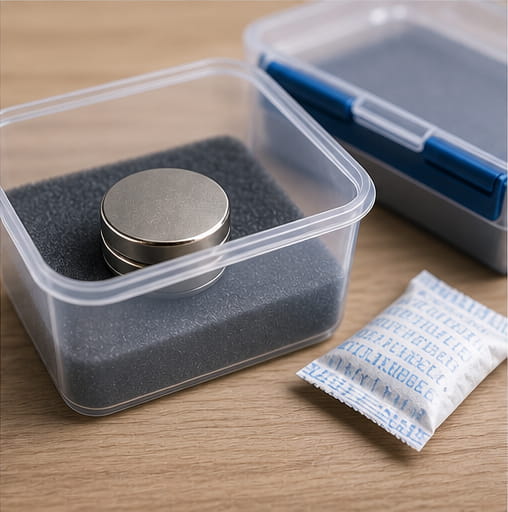
Die meisten Menschen behandeln Magnete wie Steine.
Sie werfen sie einfach in eine Schublade. Sie lassen sie gegeneinander schlagen. Sie lagern sie in der Nähe von Wärmequellen.
Und dann wundern sie sich, warum ihre Magnete so “schwach” wirken.”
Die Wahrheit ist folgende:
Eine unsachgemäße Lagerung ist einer der Hauptgründe dafür, dass Magnete mit der Zeit an Kraft verlieren.
Drei Regeln, die es zu beachten gilt:
- 1. Verwenden Sie für bestimmte Magnetformen eine Halterung. Hufeisen- und Stabmagnete sollten mit einem Weicheisen-Halter gelagert werden, der die Pole überbrückt. Dadurch entsteht ein geschlossener Magnetkreis, der eine Selbstentmagnetisierung verhindert. Ohne Halter kann ein Hufeisenmagnet innerhalb von 6 bis 12 Monaten 10–25% seiner Magnetkraft verlieren.
- 2. Halten Sie sie von Hitze fern. Schon mäßige Hitze (bei einigen Neodym-Sorten über 60 °C/140 °F) beschleunigt die Domänenunordnung. Lagern Sie Magnete nicht in der Nähe von Heizkörpern, in direktem Sonnenlicht oder in heißen Autos.
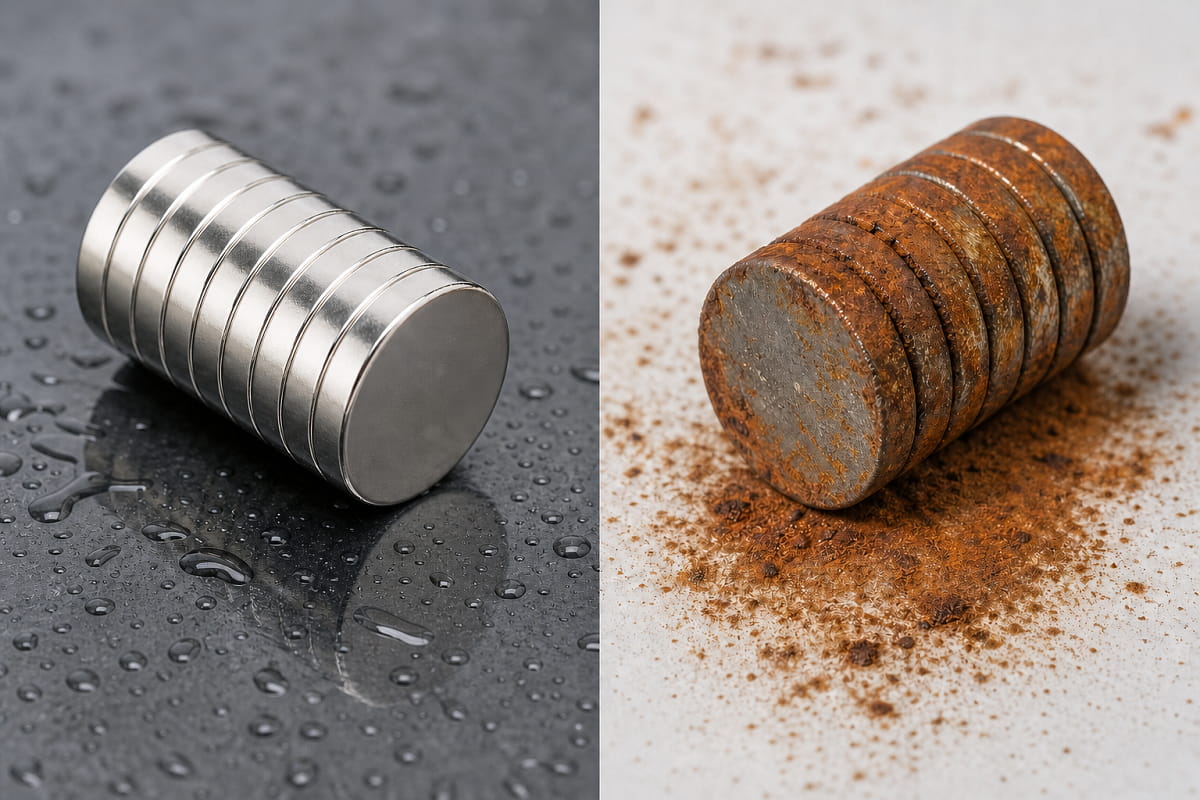
- 3. Vermeiden Sie Stöße. Wenn ein Neodym-Magnet auf einen Betonboden fällt, kann dies zu einer messbaren Verringerung seiner Magnetkraft führen. Außerdem kann es zu Absplitterungen oder Rissen kommen, wodurch unbeschichtetes Material der Korrosion ausgesetzt wird.
Profi-Tipp: Bewahren Sie gestapelte Magnete so auf, dass die Pole in dieselbe Richtung zeigen. Wenn Sie sie Pol an Pol (so dass sie sich abstoßen) lagern, entmagnetisieren sie sich gegenseitig nach und nach.
Methode #6: Verbessern Sie Ihre Magnet-Note
Ich will ganz offen zu dir sein.
Manchmal ist der beste Weg Wie man Neodym-Magnete stärker macht ist, nicht mehr zu versuchen, einen schwachen Magneten zu reparieren, sondern einfach einen besseren zu kaufen.
Und zwar aus folgendem Grund:
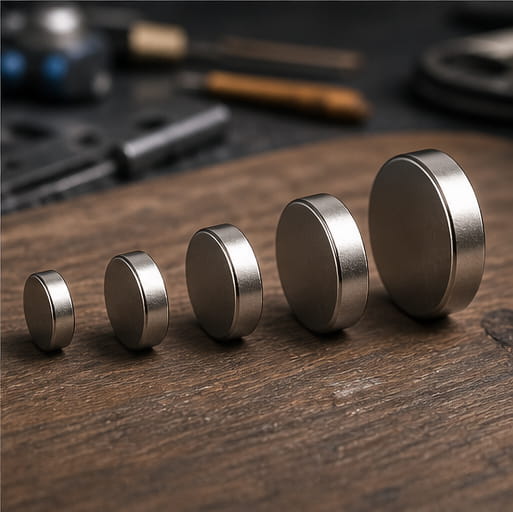
Neodym-Magnete gibt es in verschiedenen Güteklassen. N35 ist die Einstiegsstufe. N55 ist derzeit der stärkste im Handel erhältliche Magnet.
Der Unterschied?
Ein N52-Magnet erzeugt ungefähr 45% – höhere Flussdichte als ein N35 mit genau denselben Abmessungen.
| Note | Relative Stärke |
|---|---|
| N35 | 100% (Ausgangswert) |
| N42 | 120% |
| N48 | 137% |
| N52 | 145% |
| N55 | 157% |
Kann man das Upgrade zu Hause durchführen?
Nein. Die Magnetklassifizierung erfolgt bereits während der Herstellung. Man kann einen N35 nicht mit Heimwerker-Methoden in einen N52 verwandeln.
Aber Sie KÖNNEN Ihre schwachen Magnete durch hochwertigere Modelle ersetzen.
Und ganz ehrlich? Für die meisten Anwendungen ist das die einfachste und effektivste Lösung.
Kann man einen nicht mehr funktionierenden Magneten wieder magnetisieren?
Tolle Frage.
Wenn Ihr Neodym-Magnet teilweise entmagnetisiert ist (durch Hitze, Stöße oder gegensätzliche Magnetfelder), können Sie möglicherweise einen Teil seiner ursprünglichen Stärke wiederherstellen.
Wie?
Indem man es einem starken externen Magnetfeld aussetzt. Dadurch werden die magnetischen Domänen im Inneren des Materials neu ausgerichtet.
In der Industrie setzen Hersteller “Impulsmagnetisierer” ein, die Magnetfelder von über 3 Tesla erzeugen. Das ist fett.
Kann man das zu Hause machen?
Für Neodym-Magnete? Wahrscheinlich nicht.
Um ein solches Magnetfeld zu erzeugen, benötigt man spezielle Geräte. Ein typischer Neodym-Magnet weist eine sehr hohe Koerzitivfeldstärke (Widerstand gegen Entmagnetisierung) auf. Das ist hervorragend für die Haltekraft. Es bedeutet aber auch, dass man ein ebenso starkes Feld benötigt, um ihn wieder zu magnetisieren.
Was schwächere Magnete wie Alnico- oder Keramikmagnete angeht? Ja, diese können Sie zu Hause mit einer starken Spule und einer Kondensatorbank neu magnetisieren.
Aber was ist mit Neodym-Magneten? Bringen Sie diese zu einem professionellen Magnetisierungsdienst. Oder kaufen Sie einfach einen neuen.
Wie sieht es mit Heizmagneten aus?
Diese Frage wird mir ständig gestellt.
“Kann ich einen Magneten durch Erhitzen stärker machen?”
Auf keinen Fall.
Hitze ist der Feind von Permanentmagneten.
Jeder Magnet hat eine sogenannte Curie-Temperatur. Bei Neodym-Magneten liegt diese bei etwa 80–200 °C (je nach Güteklasse). Erhitzt man einen Magneten über seinen Curie-Punkt hinaus, wird er vollständig entmagnetisiert – und zwar dauerhaft.
Selbst Temperaturen UNTERHALB des Curie-Punkts können zu einem teilweisen, irreversiblen Festigkeitsverlust führen.
Fazit? Halte deine Magnete kühl. Immer.
Wie ich diese Methoden anwende (mein persönliches System)
Nach jahrelangen Tests und Experimenten ist dies nun mein bewährtes System zur Maximierung der magnetischen Leistung:
- Für sofortigen Halt: Ich bringe eine Stahlrückplatte an. Das dauert 10 Sekunden. Dadurch verdoppelt sich die effektive Zugkraft.
- Für maximale Festigkeit auf kleinem Raum: Ich staple 2–3 identische Magnete übereinander und kombiniere sie mit einem Stahlbecher. Diese Kombination ist kaum zu übertreffen.
- Zur langfristigen Lagerung: Ich verwende Halterungen für Hufeisenmagnete. Ich halte alles von Wärmequellen fern. Und ich lasse Magnete niemals gegeneinander schlagen.
- Wenn ein Magnet schwach zu sein scheint: Zunächst prüfe ich, ob er verschmutzt oder korrodiert ist. Eine Reinigung der Oberfläche kann Abhilfe schaffen. Anschließend teste ich, ob eine Stahlrückplatte die Leistung verbessert. Wenn beides nicht hilft, ersetze ich ihn durch einen hochwertigeren Magneten.
Häufig gestellte Fragen
Wird ein Magnet durch das Einfrieren dauerhaft stärker?
Nein. Die Verstärkung ist nur vorübergehend. Sobald sich der Magnet wieder erwärmt hat, kehrt seine Stärke zum Normalzustand zurück.
Kann ich Magnete unterschiedlicher Größe übereinander stapeln?
Das geht zwar, ist aber nicht ideal. Das Magnetfeld wird ungleichmäßig sein. Für optimale Ergebnisse sollten Sie identische Magnete übereinander stapeln.
Woran erkenne ich, ob mein Magnet an Kraft verloren hat?
Vergleichen Sie ihn mit einem neuen Magneten desselben Typs. Oder messen Sie die Oberflächenflussdichte mit einem Gaussmeter. Gaussmeter für den Endverbraucher sind bereits ab etwa $30 erhältlich.
Ist eine dickere Stahlrückplatte immer die bessere Wahl?
Bis zu einem gewissen Grad. Sobald der Stahl dick genug ist, um vollständig mit magnetischem Fluss gesättigt zu werden (bei kleinen Magneten in der Regel 3–5 mm), bringt eine größere Dicke keinen Vorteil mehr.
Alles zusammenfassen
Das sollten Sie also über Folgendes wissen: Wie man Neodym-Magnete stärker macht:
Die grundlegenden Eigenschaften eines Magneten lassen sich zu Hause nicht verändern. Aber man KANN seine effektive Anziehungskraft durch Stapeln, eine Stahlunterlage, richtige Lagerung und strategische Anordnungen wie Halbach-Anordnungen erheblich steigern.
Fangen Sie mit den einfachen Dingen an. Stapeln Sie Ihre Magnete. Legen Sie eine Stahlplatte dazwischen. Bewahren Sie sie ordnungsgemäß auf.
Wenn Sie mehr Leistung benötigen? Steigen Sie auf eine höhere Leistungsklasse um oder kaufen Sie einen größeren Magneten.
Und was auch immer du tust … halte sie von Hitze fern.
Ein letzter Tipp:
Bevor Sie eine dieser Methoden ausprobieren, reinigen Sie bitte die Oberfläche Ihres Magneten. Staub, Schmutz und Oxidation können die Haftkraft erheblich verringern. Ein weiches Tuch und milde Seife reichen möglicherweise schon aus.
Und jetzt lass diese Magnete für dich arbeiten.