Kurzzusammenfassung
Wenn Sie Neodym-Magnete voneinander trennen, ziehen Sie sie niemals direkt auseinander – wenden Sie stets eine gleitende oder scherenartige Bewegung an, um Verletzungen und Schäden an den Magneten zu vermeiden. Verwenden Sie bei stärkeren Magneten eine Hebelwirkung (z. B. eine Tischkante) oder einen speziellen Magnetseparator; für Hochleistungsmagnete mit einer Anziehkraft von über 200 lbs sind zwei Personen und ein Keil erforderlich.
Tragen Sie stets eine Schutzbrille und Schutzhandschuhe, da diese Magnete bei einem Aufprall zerbrechen oder die Haut zwischen sich einklemmen können.
Du hast gerade eine Packung Neodym-Magnete bekommen. Du bist ganz aufgeregt. Du nimmst sie aus der Schachtel … und schon springen sie aneinander, als wollten sie für immer zu einem einzigen Magneten verschmelzen.
Man versucht, sie auseinanderzuziehen, sie mit den Fingern auseinanderzuhebeln, aber es gelingt nicht.
Beim Trennen von Neodym-Magneten kommt es nicht auf die reine Kraft an. Tatsächlich ist es das Schlimmste, sie einfach direkt auseinanderzuziehen. am schlimmsten Das ist das Beste, was Sie tun können. Diese Seltenerdmagnete sind unglaublich stark, aber auch überraschend spröde. Wenn Sie sie falsch belasten, zerbrechen sie, splittern ab oder springen wieder zusammen und klemmen Ihre Finger so fest ein, dass sie bluten.
Aber keine Sorge, als Profi Hersteller von Neodym-Magneten, Ich habe im Laufe der Jahre persönlich Tausende dieser Magnete voneinander getrennt (wirklich Tausende), und ich werde Ihnen genau zeigen, was funktioniert.
Dann legen wir mal los.
Was Sie wissen müssen, bevor Sie loslegen
Bevor wir uns mit den Techniken befassen, wollen wir zunächst auf die Sicherheit eingehen. Das ist kein optionaler Punkt.
Neodym-Magnete sind spröde. Sie bestehen aus einem Sinterwerkstoff (im Grunde genommen aus gepresstem Metallpulver). Wenn man sie fallen lässt oder zwei Teile zu heftig aneinanderstoßen, können sie zerbrechen oder in rasiermesserscharfe Splitter zerspringen.
Tragen Sie eine Schutzbrille. Das meine ich ernst. Ich habe schon gesehen, wie Magnete beim Aufprall zerbrechen, und diese Splitter fliegen sehr schnell. Deine Augen sind unersetzlich.
Tragen Sie Schutzhandschuhe. Vor allem, wenn Sie mit Magneten arbeiten, die größer als 30 mm (etwa 1,2 Zoll) sind. Starke Magnete können die Haut zwischen sich einklemmen und zerquetschen. Das ist keine Übertreibung – ich habe Fotos von Verletzungen gesehen, und die sehen wirklich übel aus.
Halten Sie elektronische Geräte und Kreditkarten fern. Neodym-Magnete löschen den Magnetstreifen einer Kreditkarte sofort. Außerdem stören sie Herzschrittmacher, Festplatten und so ziemlich alles, was eine Leiterplatte enthält.
Na gut, kommen wir nun zum Wesentlichen.
So trennt man Neodym-Magnete voneinander
Methode #1: Die Schiebetechnik (für kleine bis mittelgroße Magnete)
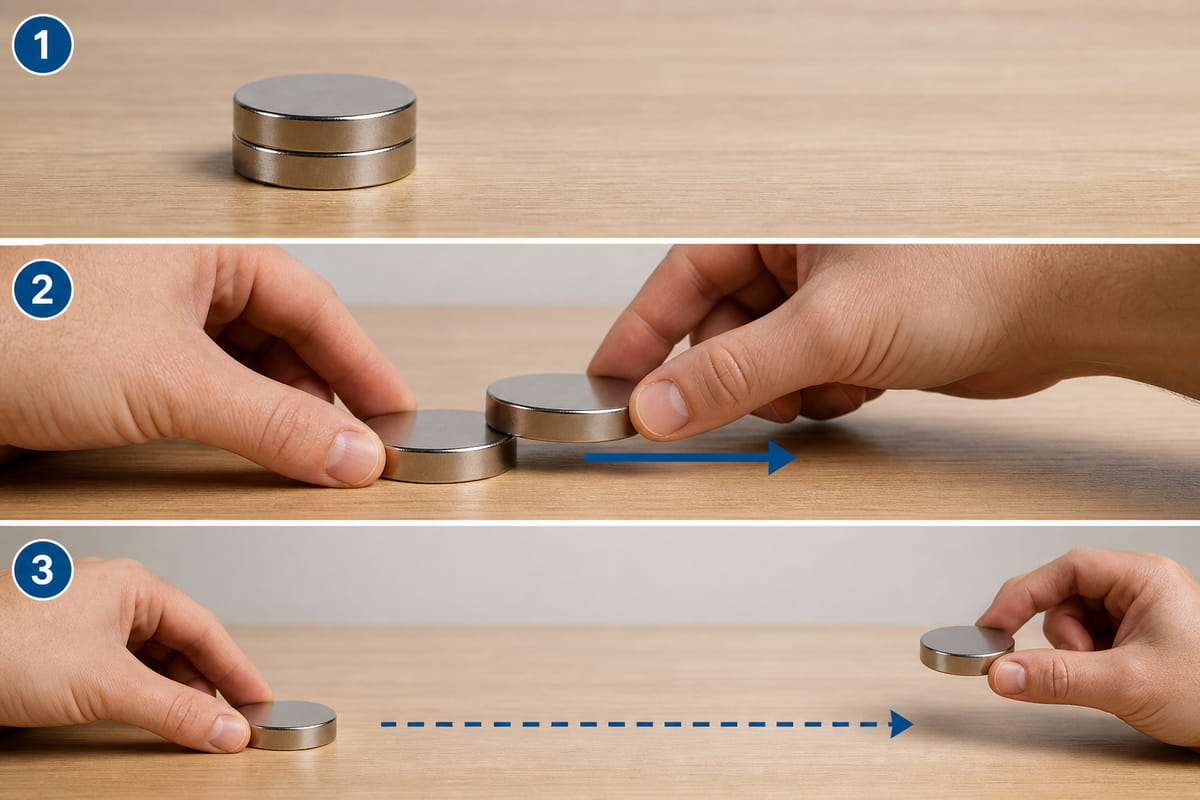
Das ist meine bewährte Methode für 90%-Magnete. Sie ist einfach, schnell und erfordert keine Spezialwerkzeuge.
- Schritt 1: Legen Sie den unteren Magneten auf eine ebene, stabile, nichtmagnetisch Unterlage. Ein Holztisch eignet sich hervorragend. Ebenso ein Schneidebrett oder ein Stück dickes Plastik. Vermeiden Sie (natürlich) Metalloberflächen.
- Schritt 2: Halten Sie den unteren Magneten mit einer Hand fest. Schieben Sie den oberen Magneten mit der anderen Hand horizontal – so, als würden Sie einen Eishockey-Puck vom Tisch schieben.
- Schritt 3: Sobald der obere Magnet die Kante passiert hat, zieh ihn sofort weit weg. Ich meine weit. Mindestens ein paar Fuß. Wenn du das nicht tust, zieht die magnetische Anziehungskraft es sofort wieder zurück in den Stapel.
Profi-Tipp: Verwende ein Stück Holz oder eine Plastikkarte zum Drücken, falls die Magnete für deinen Daumen zu stark sind. Deine Finger werden es dir danken.
Mit dieser Technik habe ich in meiner Werkstatt schon Hunderte von Magneten voneinander getrennt. Das funktioniert jedes Mal.
Methode #2: Die Tischkante (für stärkere Magnete)
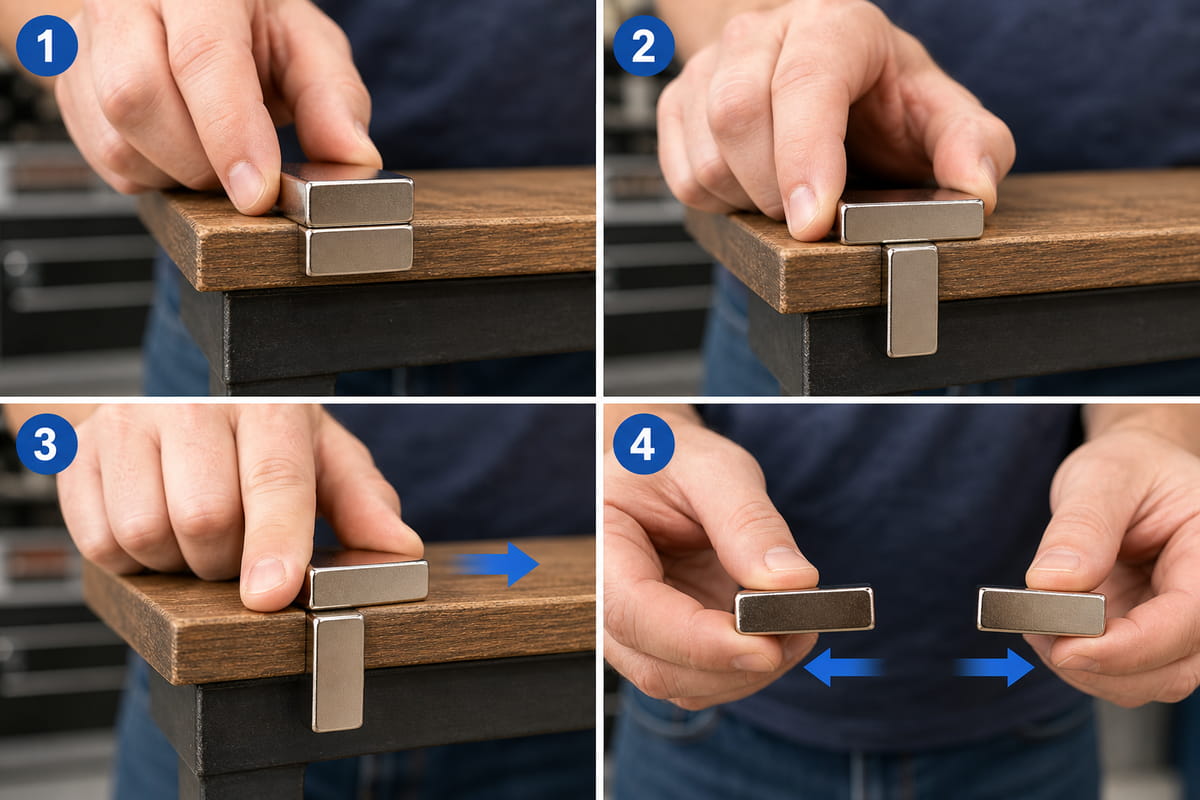
Manchmal reicht die Schiebetechnik nicht aus. Wenn man es mit Magneten zu tun hat, die eine erhebliche Anziehungskraft entwickeln (man denke an 50+ lbs), braucht man eine Hebelwirkung.
Und so gehe ich vor:
- Schritt 1: Platzieren Sie die festklebenden Magnete direkt am Rand eines stabilen Tisches oder einer Werkbank.
- Schritt 2: Lassen Sie den unteren Magneten vollständig über die Kante hinausragen. Halten Sie den oberen Magneten an die Tischplatte.
- Schritt 3: Drücken Sie den oberen Magneten gerade nach unten oder horizontal, bis er sich löst.
- Schritt 4: Ziehen Sie die voneinander getrennten Magnete schnell auseinander.
Das funktioniert, weil Ihr Körpergewicht und die Tischkante Ihnen einen mechanischen Vorteil verschaffen. Sie nutzen nicht mehr nur Ihre Fingerkraft – Sie nutzen die Schwerkraft und die Hebelwirkung.
Ich habe diese Methode zum ersten Mal entdeckt, als ich Bestellungen für einen Kunden verpackte und zwei 80-mm-Magnete nicht voneinander lösen konnte. Die Tischkante hat mir da aus der Patsche geholfen (und meine Finger gerettet).
Methode #3: Der Magnetabscheider (für Hochleistungsmagnete)
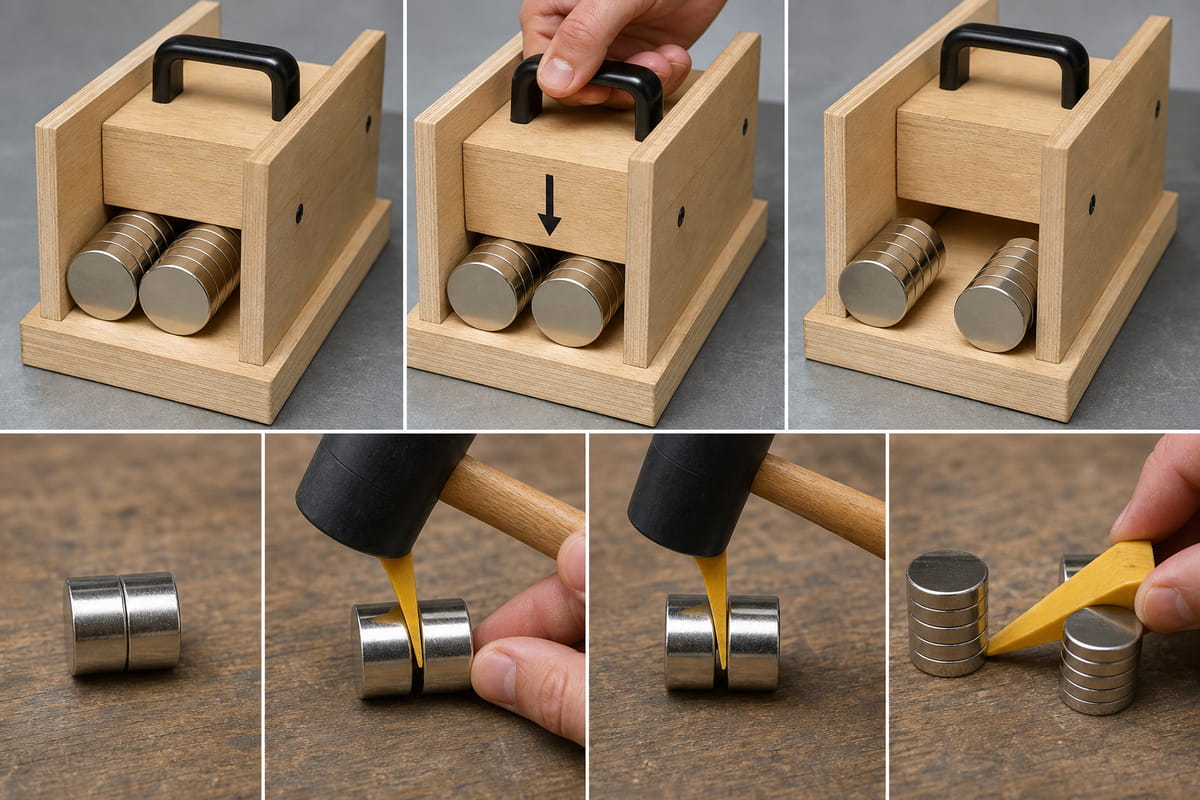
Seien wir mal ehrlich: Manche Magnete sind einfach zu gefährlich, um sie mit der Hand voneinander zu trennen.
Wenn Sie mit Magneten arbeiten, die Über 200 lbs Zugkraft, dann hören Sie auf, diesen Abschnitt zu lesen, und kaufen Sie sich ein ordentliches Werkzeug.
Magnetabscheider aus Holz sind der Industriestandard. Sie funktionieren wie eine Guillotine – man legt die Magnete hinein, und ein verschiebbarer Holzblock drückt sie sicher auseinander. Keine Finger in der Gefahrenzone.
Sie haben keinen speziellen Trenner? Hier ist eine Alternative zum Selbermachen:
Verwenden Sie ein nichtmagnetischer Keil (Kunststoffkeile zum Baumfällen eignen sich hervorragend, ebenso wie Holzkeile). Klopfen Sie den Keil vorsichtig zwischen die beiden Magnete, um einen Spalt zu schaffen. Sobald der Spalt groß genug ist, können Sie die Magnete auseinander schieben.
Warnung: Dazu braucht man zwei Personen. Eine, die den Keil festhält, und eine, die ihn einschlägt. Und vergesst nicht, die Schutzbrille aufzusetzen.
Alternative Techniken, die funktionieren
Neben den wichtigsten Methoden gibt es noch einige weitere Ansätze, die Beachtung verdienen. Dabei handelt es sich um Techniken, die ich von anderen Magnet-Nutzern sowie durch eigenes Ausprobieren gelernt habe.
Die Treppenmethode
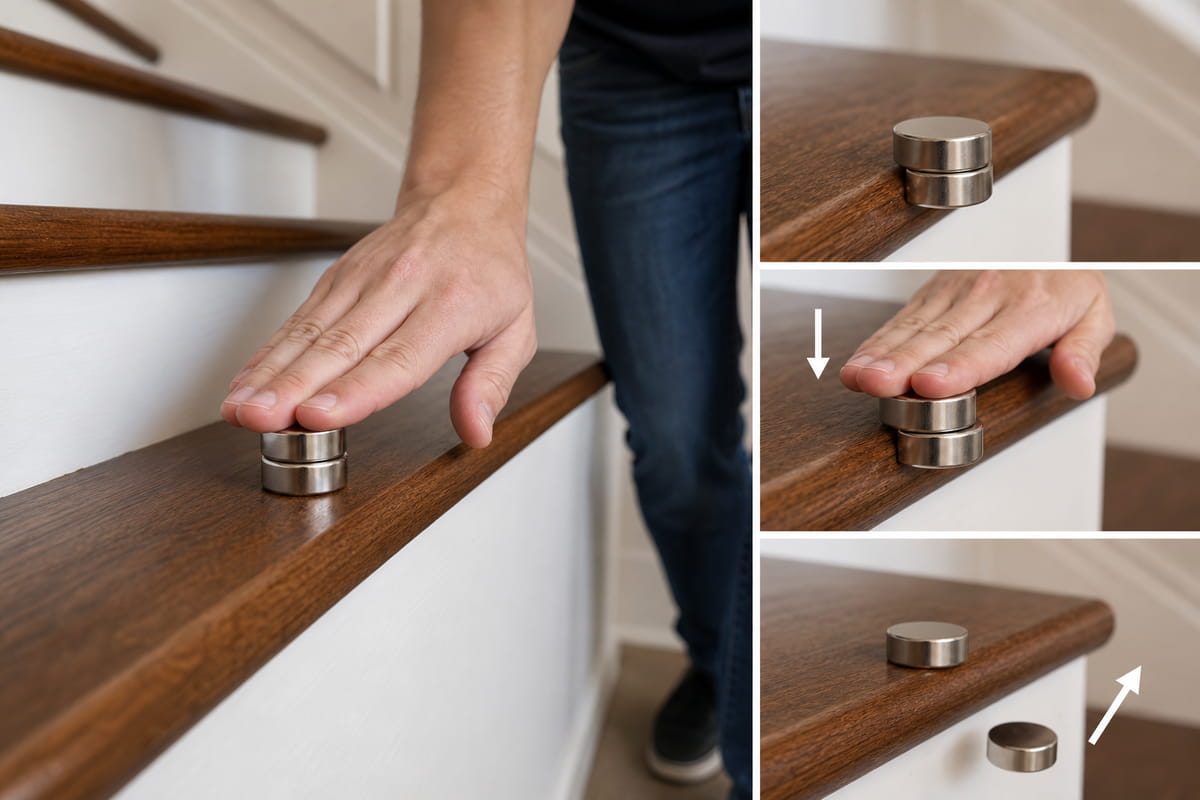
Das ist clever. Leg deine aneinanderhaftenden Magnete auf die Kante einer Treppenstufe. Nutze dein Körpergewicht, um den oberen Magneten nach unten zu drücken, während die Treppenkante den unteren festhält. Der Clou dabei ist ein scharfe, schnelle Bewegung. Wenn man zu langsam vorgeht, zieht die magnetische Anziehungskraft sie wieder zusammen.
Die Schubladenmethode
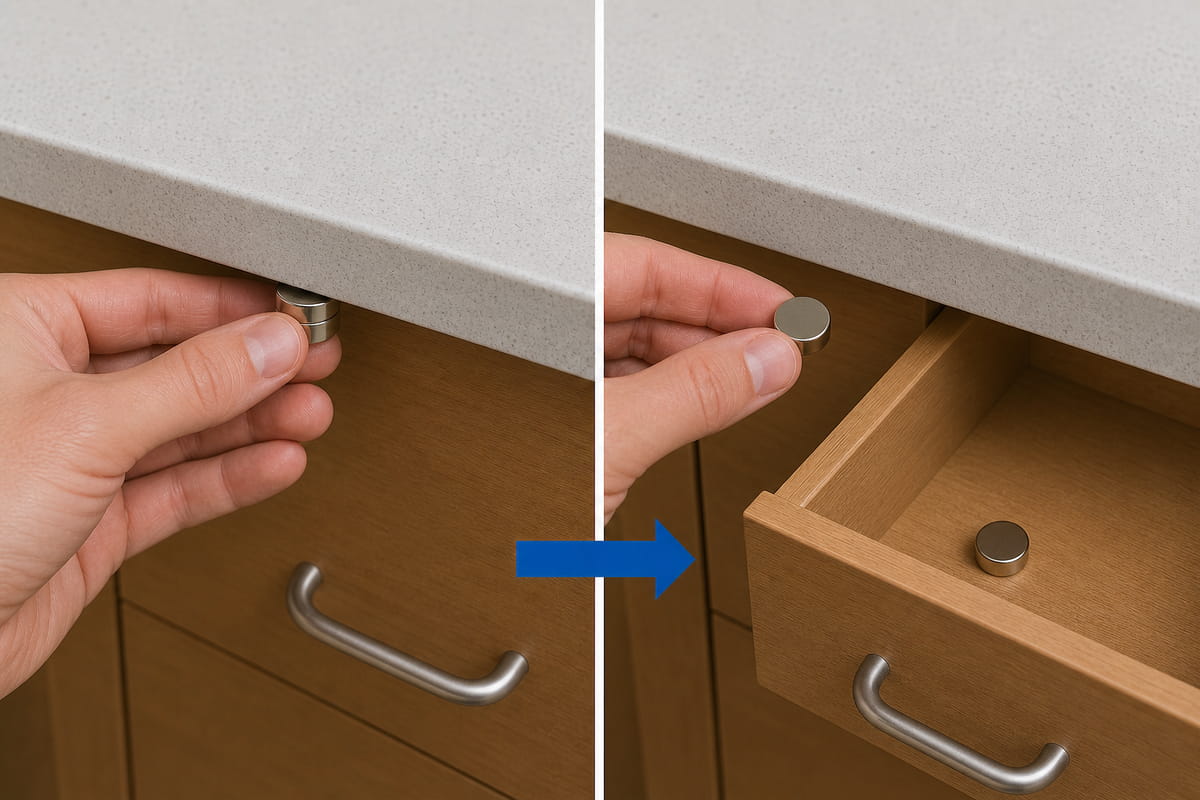
Ich finde diesen Trick genial. Halte die Magnete so, dass einer an der Kante der Arbeitsplatte anliegt und der andere unterhalb der Kante, während eine Schublade geöffnet ist. Schließe die Schublade – dadurch wird der untere Magnet vom oberen weggedrückt und landet direkt in der Schublade. Keine eingeklemmten Finger. Keine abgebrochenen Fingernägel. Genial.
Rotierende Quader-Magnete
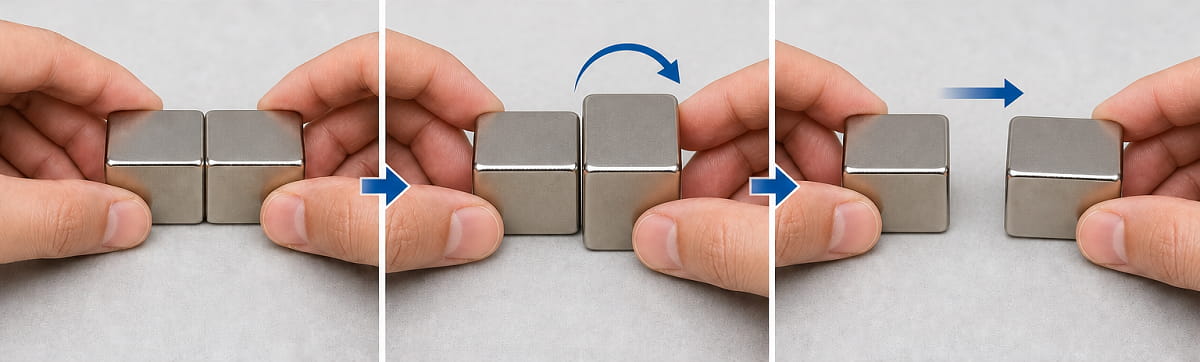
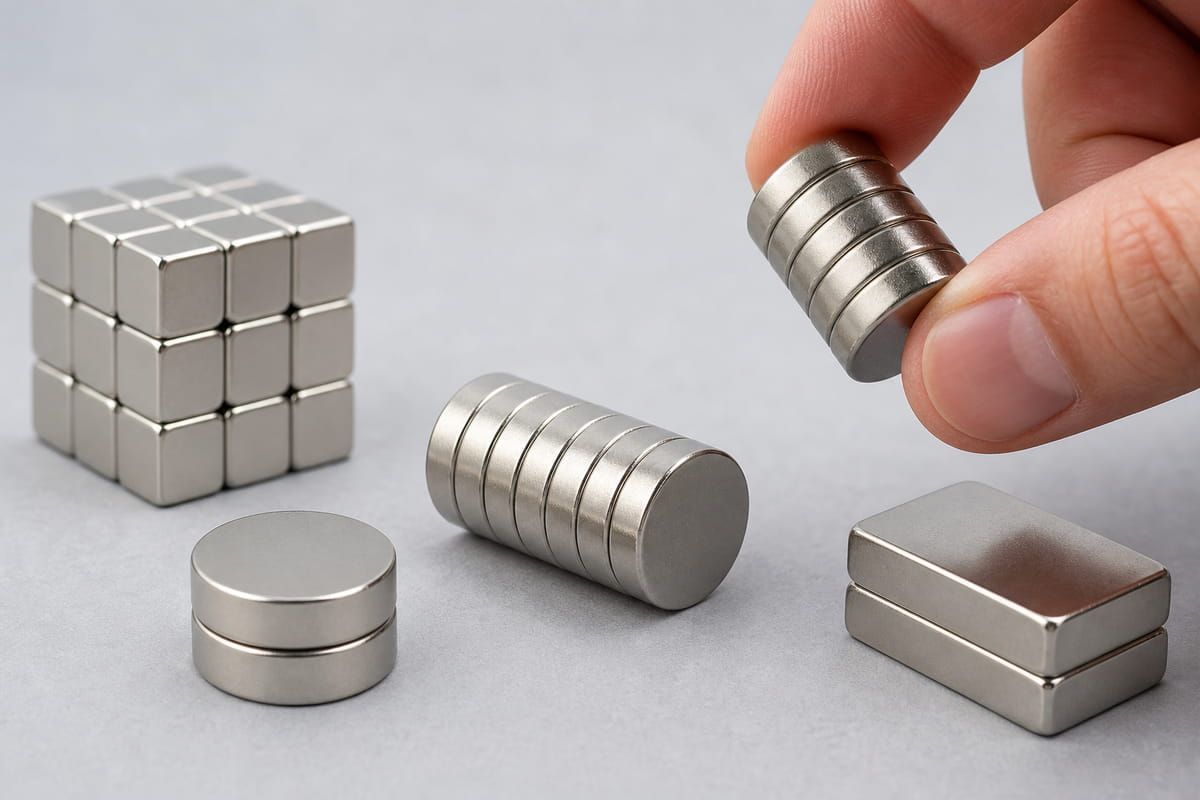
Wenn Sie längliche oder würfelförmige Magnete voneinander trennen möchten, versuchen Sie, einen davon um 90 Grad zu drehen. Dies verringert die Kontaktfläche zwischen den Magneten, wodurch sich die Kraft, die sie zusammenhält, drastisch verringert. Sobald sie sich leichter handhaben lassen, schließen Sie die Trennung mit der Schiebetechnik ab.
Was ist mit zusammengeklebten Magneten?
Das ist eine ganz andere Sache.
Manchmal sind Neodym-Magnete auf Metallhalterungen geklebt (wie es häufig bei Festplattenlautsprechern und alten Elektronikgeräten der Fall ist). Diese lassen sich nicht einfach auseinanderziehen – sie sind mit Industriekleber verklebt.
Aufgrund meiner Recherchen und Gespräche mit anderen Magnet-Fans hat sich Folgendes bewährt:
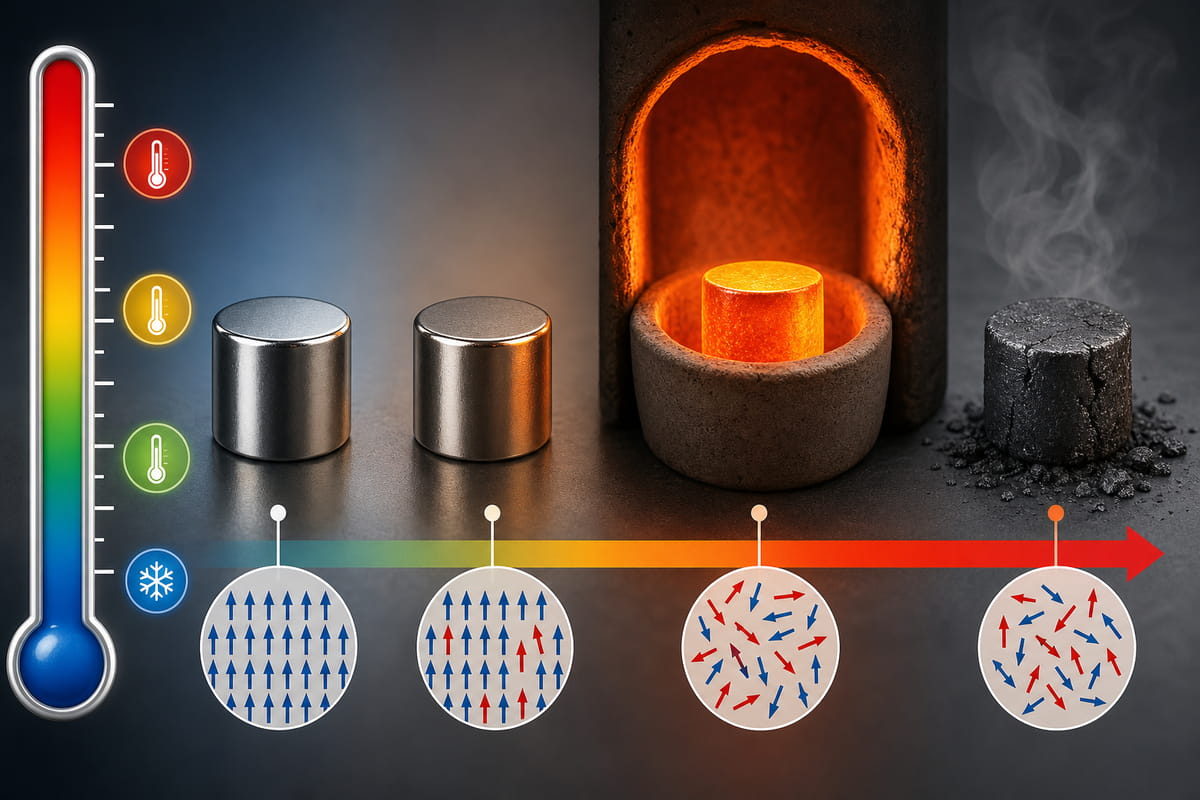
Hitze ist dein Freund. Viele Klebstoffe werden bei Erwärmung weich. Erwärmen Sie die Baugruppe mit heißem Wasser (nicht kochendem). Seien Sie jedoch vorsichtig – Neodym-Magnete verlieren ihre Magnetkraft, wenn sie über ihre Curie-Temperatur (bei Standardqualitäten etwa 80 °C oder 176 °F) erhitzt werden. Verwenden Sie daher nur heißes Leitungswasser und keine Heißluftpistole.
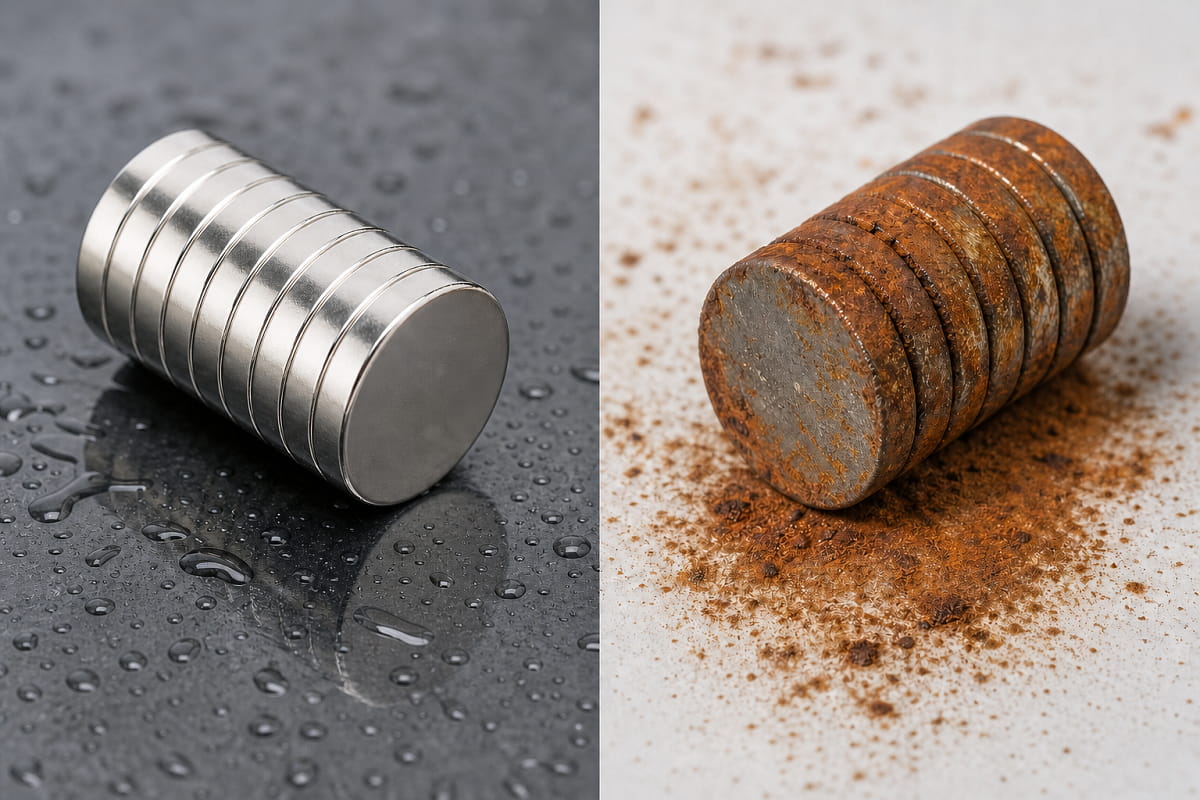
Aceton kann helfen. Tragen Sie es mit einem Wattestäbchen auf den Klebstoff auf und lassen Sie es einige Minuten einwirken. Der Nachteil? Aceton kann die Beschichtung des Magneten beschädigen. Sobald diese Beschichtung beschädigt ist, breitet sich Rost schnell aus.
Methylenchlorid ist zwar stärker, aber auch gefährlicher. Da es sich um ein potenzielles Karzinogen handelt, sollten Sie es in einem gut belüfteten Bereich und mit geeigneter Schutzausrüstung verwenden.
Profi-Tipp: Wenn Sie Magnete für ein Projekt kaufen und wissen, dass Sie diese später wieder voneinander trennen müssen, bitten Sie den Lieferanten, sie mit Abstandshalter aus Kunststoff zwischen den einzelnen Magneten. Dadurch entsteht ein kleiner Spalt, der das Trennen um das Zehnfache erleichtert. Viele Lieferanten (wie die, mit denen ich zusammenarbeite) erledigen das kostenlos, wenn man sie darum bittet.
So trennt man Magnete wieder voneinander, die wieder aneinander haften
Das haben wir alle schon erlebt.
Du hast zwei Magnete erfolgreich voneinander getrennt. Du drehst dich für eine Sekunde um. Und SNAP – Sie sind wieder zusammen.
Keine Panik.
Wende einfach wieder die Methode mit der Folie oder dem Tabellenrand an. Aber dieses Mal, sobald sie voneinander getrennt sind, Lagern Sie sie in großem Abstand zueinander. Ich meine damit die gegenüberliegenden Seiten deines Arbeitsplatzes.
Wenn Sie viele Magnete aufbewahren müssen, stapeln Sie diese und legen Sie zwischen jeden einzelnen einen Abstandhalter aus Kunststoff. Oder bewahren Sie sie auf einer Stahlleiste (einem Stück Weichstahl) auf – so kann sich das Magnetfeld entladen, und die Magnete lassen sich später leichter voneinander trennen.
Häufige Fehler, die Menschen machen (und wie man sie vermeidet)
Diese Fehler habe ich schon unzählige Male gesehen. Mach sie nicht.
Fehler #1: Magnete mit Metallwerkzeugen auseinanderhebeln. Metallwerkzeuge können sich magnetisieren. Schlimmer noch: Sie können aus der Hand rutschen und Magnete quer durch den Raum schleudern. Verwenden Sie Holz, Kunststoff oder Pappe.
Fehler #2: Der Versuch, Magnete auf einem Betonboden voneinander zu trennen. Wenn sie aneinander haften oder Ihnen einer herunterfällt, zerschmettert Beton einen Neodym-Magneten augenblicklich. Arbeiten Sie daher auf Teppich, Holz oder einer Gummimatte.
Fehler #3: Keine Schutzbrille tragen. Ich weiß, das klingt nach Übertreibung. Ist es aber nicht. Ich habe selbst miterlebt, wie ein Magnetchip drei Fuß quer durch den Raum geflogen ist.
Fehler #4: Getrennte Magnete werden zu dicht beieinander gelagert. Du hast dir all diese Mühe gemacht, sie voneinander zu trennen, und jetzt sind sie wieder zusammen, weil du sie nur sechs Zoll voneinander entfernt hast. Halte mindestens zwei Fuß Abstand ein.
Abschließende Gedanken
Hör mal, Neodym-Magnete trennen Das ist nicht kompliziert. Aber es erfordert die richtige Technik und einen gesunden Respekt davor, wie stark diese kleinen Kerlchen tatsächlich sind.
Zusammenfassend lässt sich sagen:
- Niemals direkt auseinanderziehen – immer gleiten oder scheren
- Nutze die Tischkante als Hebel auf stärkeren Magneten
- Besorgen Sie sich einen Magnetabscheider für Magnete mit einer Zugkraft von über 200 lb
- Tragen Sie eine Schutzbrille und Handschuhe. – immer
- Magnete mit Abstandhaltern aufbewahren um eine spätere Trennung zu erleichtern
Ich arbeite nun schon seit Jahren mit Neodym-Magneten, und ich bin immer noch überrascht, wie stark sie sind. Ein 10-mm-Würfel sieht nicht gefährlich aus. Aber er kann einem durchaus wehtun, wenn man unvorsichtig ist.
Die gute Nachricht? Mit den Techniken, die ich Ihnen gerade gezeigt habe, können Sie jeden Magneten sicher und schnell trennen.
Jetzt probier diese Methoden doch mal aus. Und bitte – setz die Schutzbrille auf.